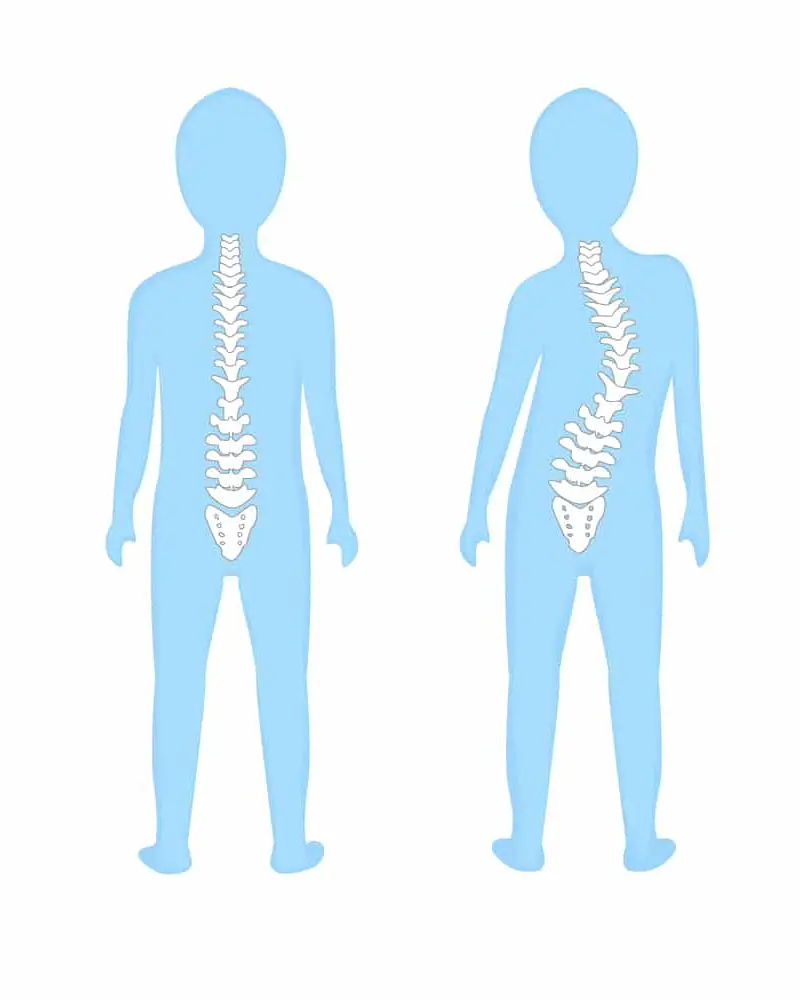
Spinal deformity refers to abnormal curvatures or misalignments of the spine, such as scoliosis, kyphosis, or lordosis.
What we do?
We provide advanced care for spinal deformities such as scoliosis, kyphosis, and degenerative conditions, using safe techniques and personalized treatments to restore balance and improve quality of life.
Deformity Correction
Comprehensive treatments for scoliosis, kyphosis, and complex spinal curves, ensuring safe correction and improved mobility.
Specialized Therapies
Observation, bracing, physiotherapy, and guided growth techniques are used to manage spinal deformities at different stages of life.
Advanced Technology
Intra-operative neuromonitoring, O-ARM navigation, robotic-assisted systems, and minimally invasive techniques work together to ensure the highest level of safety and precision during complex spinal surgeries.
Expert Care
With decades of specialised experience, Dr. Balamurali treats the full spectrum of spinal deformities—from simple to highly complex—helping patients regain function, mobility, and confidence through a comprehensive, team-based care.
Deformity
Spinal deformity can happen at a very young age or in an elderly. We have the expertise to treat congenital scoliosis in children as young as 1-2 years to adolescent.
Dr Balamurali, leading spine surgeon in Chennai, India gives particular emphasis on restoration of normal global and regional spinal balance. State-of-the art spinal cord monitoring techniques are employed by neurophysiologists in the operating rooms to provide the highest levels of patient safety. Navigation is used in complex deformities.
Conditions Treated Include
Adult degenerative scoliosis
Kyphotic deformity
Adult Idiopathic Scoliosis
High grade spondylolisthesis
Congenital deformities
Post TB deformity
Ankylosing spondylitis
Rheumatoid arthritis
We also have good experience in managing elderly patients who develop degenerative scoliosis as a result of age and osteoporosis.
Scoliosis
Scoliosis is abnormal sideward bending of the spine. There are various causes for scoliosis of which genetic cause is seen in almost 30 % of the patients. Contrary to the popular belief, abnormal loading like carrying heavy school bags or poor posture cannot cause scoliosis. Depending on the cause, scoliosis is classified into
Congenital scoliosis
Neuromuscular scoliosis
Syndromic scoliosis
Idiopathic scoliosis
Degenerative scoliosis
Treatment depends on the cause of scoliosis, age of the child/patient, severity of curve and associated anomalies.
Symptoms
Tilted or uneven shoulders (one above the other)
Asymmetry of the rib cage
Uneven waist line and hip level
Hunched back and unequal limb size in severe cases
Pain is rare in scoliosis
Scoliosis treatment options
Observation with periodic evaluation
Bracing
Physiotherapy
Minimal Intervention - Growth Rod
Surgical deformity correction
01
Congenital Scoliosis
Present from the birth and is due to defective formation or development of the vertebral bone. This condition needs immediate detailed evaluation as it is usually associated with anomaly in spinal cord, brain and other organs including heart, kidney, gastro intestinal tract and other bones.
02
Neuromuscular Scoliosis
Scoliosis secondary to the abnormality in muscles and nerves like cerebral palsy, muscular dystrophy and spinal muscular atrophy. The weak nerves and muscles are not capable of supporting the spine leading to its curvature. X-ray of the spine shows a typical long ‘c’ shaped curve.
03
Syndromic Scoliosis
Associated with syndromes like connective tissue disorders and neurofibromatosis. The progression or worsening of scoliosis is rapid in this group of patient and so close monitoring and early intervention is necessary.
04
Idiopathic Scoliosis
The exact cause of the scoliosis is not known and it is the most common type. Girl children are more affected than boys and is usually noticed after 10 years of age until they reach full growth limit (skeletal maturity)
05
Degenerative Scoliosis
Due to wear and tear of the disc and facet joint in spine and usually seen after 50 years of age. Unlike other types of scoliosis, degenerative one is associated with back pain and radiating pain in the legs.
When surgery is indicated?
If associated anomaly in brain or spine like cord tethering, diastomyelia or Arnold Chiari malformation is present, they should be treated first
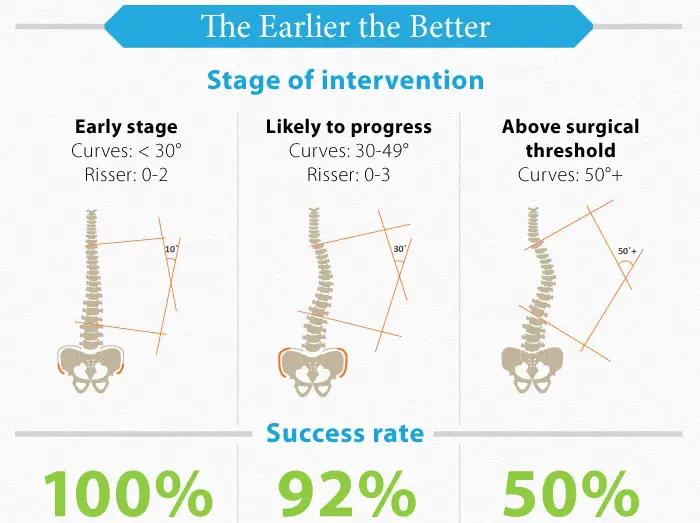
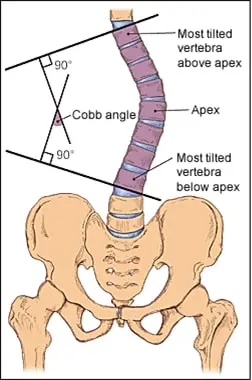
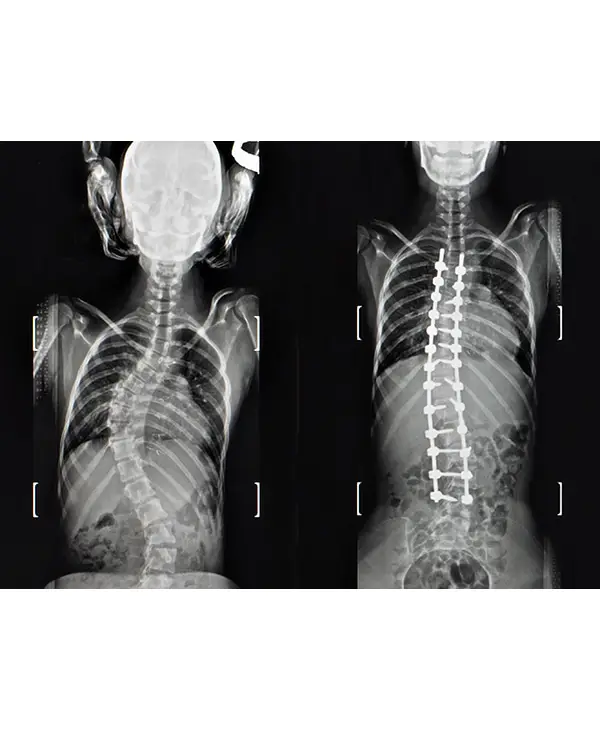
For curves up to 30° periodic follow up with x-rays has to be done. Curves with angle of 30° to 40° needs bracing and close monitoring. Curves more than 40-45° in children with growth potential should be corrected with surgery (posterior instrumented deformity correction and fusion).
Congenital scoliosis:
Usually bracing or body cast application is done up to 6 years of age and then assisted growth technique (growth rod application and serial distraction) is done up to the age of menarche. Around menarche when the growth spurt happens, definitive surgery (deformity correction and fusion) is done.
Adolescent idiopathic scoliosis:
Need for surgery depends on
Age
Severity of curve
Skeletal maturity(determined with x-ray) (i.e growth remaining)
What are the safety precautions taken during Scoliosis surgery?
Scoliosis surgery are very complex operations and must be performed only in centres that have adequate facilities and experiences surgeons. At Kauvery hospital we have both and we use several safety precautions to avoid any neurological deficit or complications.
Equipment used are
Intergrated Neuro Spine Operations Theatre
O Arm Guided Neuro Navigation (Robotic Guided) surgery
Neuro Navigations (Robotic Guided) surgery
High speed drill and Ultrasonic Curator
3D X ray machine
Robotic Guided 3D, 4K High end microscope
Intra operative Neuro Monitoring
What is Intra-operative monitoring ( IOM) ?
Intraoperative neurophysiological monitoring has been utilized to minimize neurological morbidity from surgery. The goal of is to identify changes in brain, spinal cord, and peripheral nerve function prior to irreversible damage.
Detect neurological injury during surgery on brain, spinal cord or nerves
Use of neurophysiological parameters for detecting changes which will alert if any surgically induced insults occur
To assess the function of spinal cord transmission function during an operation
Corticospinal tracts : Motor evoked potentials (MEPs)
Electromyography (EMG) : Free-run, Stimulated
“D waves” for spinal cord tumor surgery
Function mapping of cranial nerves especially facial nerve during nerve sheath tumour surgeries
Ensuring Safety in Every Step of Scoliosis Surgery
Scoliosis surgery requires precision and expertise. Using advanced technology, robotic navigation, and continuous neuro monitoring, we ensure maximum safety and minimal risks.
Case Studies of Scoliosis:
Degenerative vs. Congenital
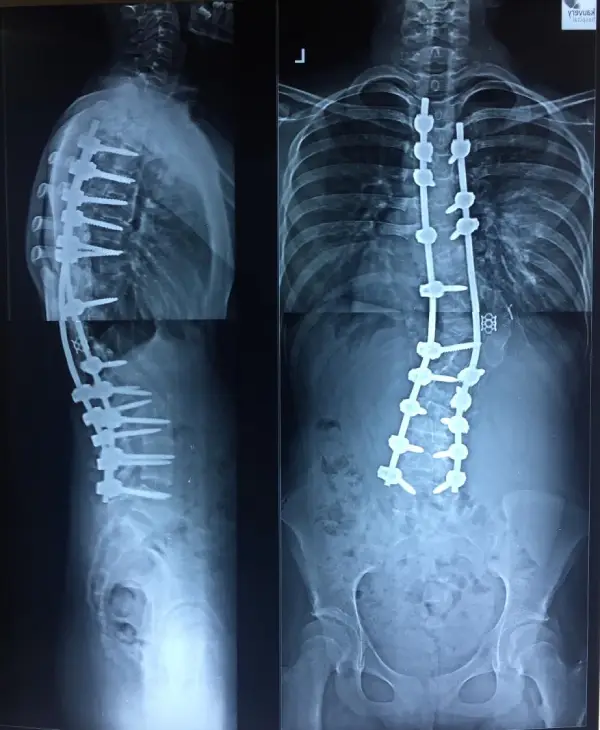
Degenerative Scoliosis
Presentation
67-Year-Old Female
Chronic low back pain radiating to the posterior thigh for a year, with urinary incontinence for six months. Patient fully dependent on caregiver for daily activities.
Diagnosis
Degenerative Scoliosis
Treatment
Minimally Invasive D11 to L5 instrumented deformity correction, decompression and fusion
Outcome
Independence regained with relief from leg symptoms; patient now performs daily activities independently while managing osteoporosis.
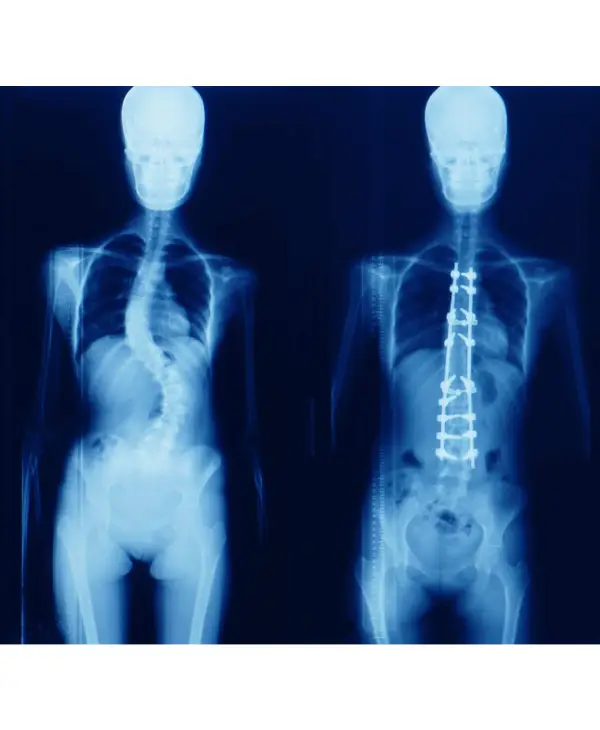
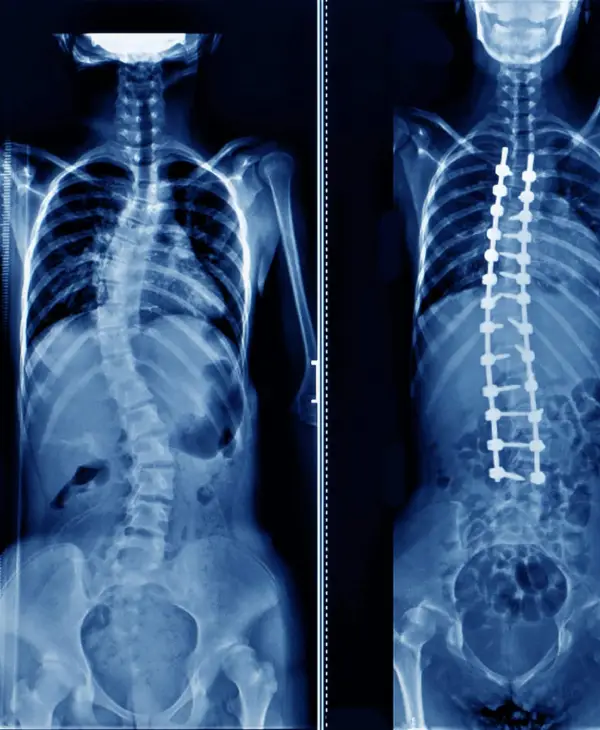
Minimally Invasive Deformity Correction & Fusion Pre Op
Minimally Invasive Deformity Correction & Fusion Post Op
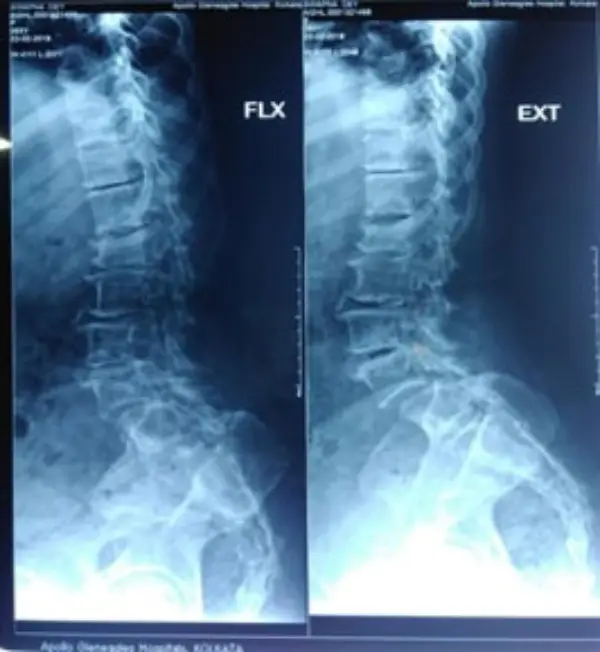
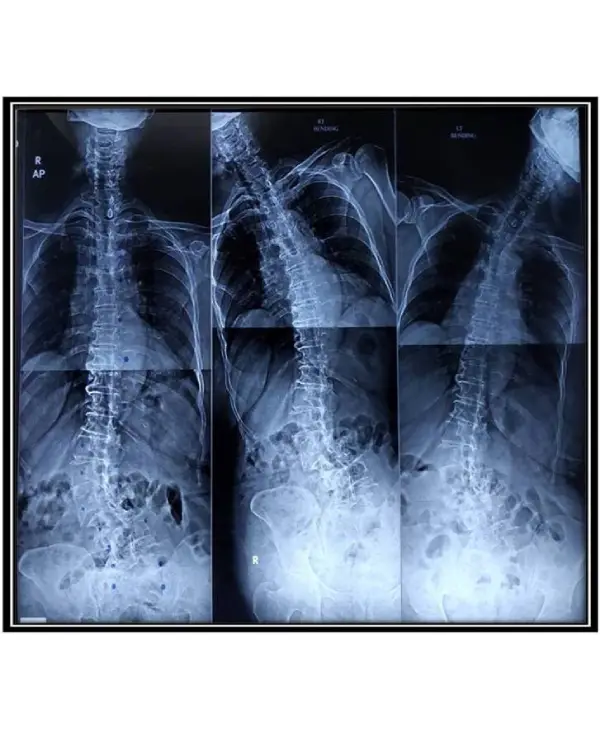
Adult Degenerative scoliosis Pre OP X ray
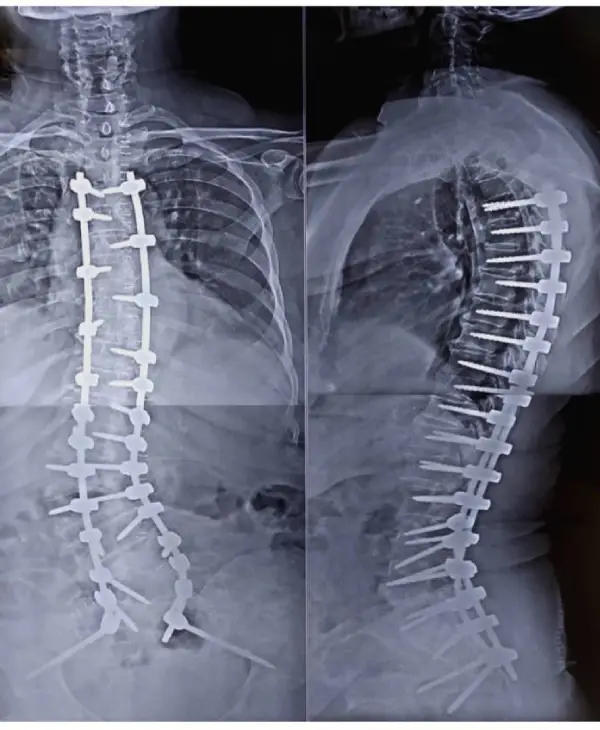
Adult Degenerative scoliosis Post OP X ray
Adult Degenerative scoliosis Post OP X ray
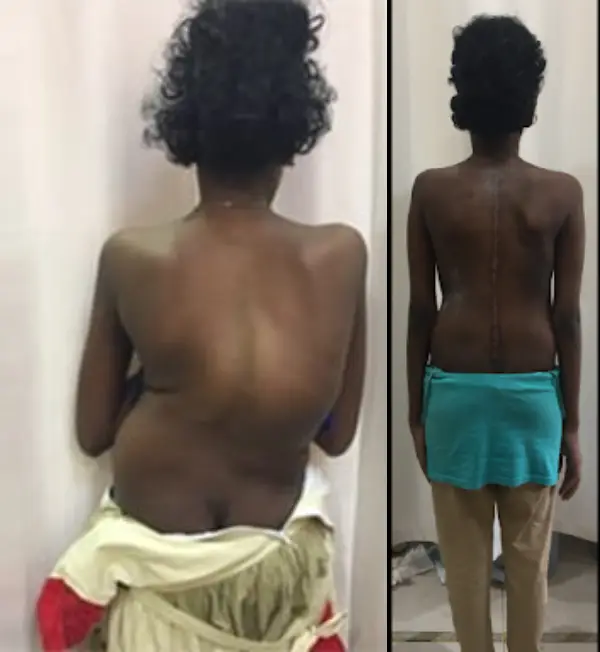
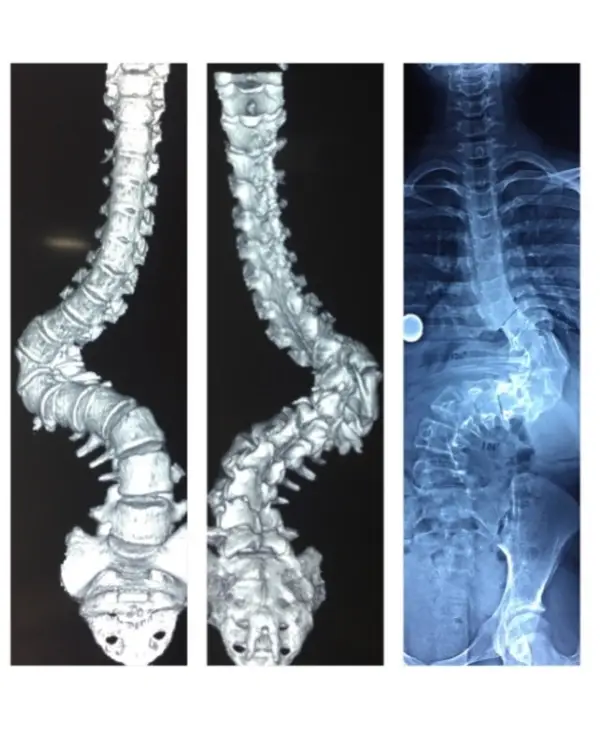
Congenital Scoliosis
Presentation
12-Year-Old Child
Severe cosmetically and functionally disabling spinal deformity affecting quality of life and self-esteem.
Diagnosis
Congenital Scoliosis with Hemivertebra and Unsegmented Bar
Treatment
Advanced Vertebral Column Resection (VCR) with cage reconstruction for comprehensive deformity correction
Outcome
Complete return to normal life. Significant improvement in posture and self-confidence. Child now thriving with restored self-esteem.